If your car is squealing, grinding, pulling to one side, or the pedal feels different than usual, your brakes are trying to tell you something. This guide walks through the seven most common warning signs, what’s actually happening inside your Fast and Reliable Brake Repair Service In Naples, FL when you notice them, and how urgent each one is – from “get it looked at this week” to “stop driving and call for help now.”
This is written for Naples drivers specifically, because stop-and-go traffic on US-41, the area’s heat and humidity, and seasonal snowbird traffic all wear brakes down faster than they do in a lot of other places. If you’re noticing any of the signs below, you’ll know what it means and what to do next by the end of this article.
Why Brakes Wear Out Faster in Naples
Brake components don’t wear on a fixed schedule – they wear based on how and where you drive. A few things about driving in Naples specifically shorten the life of pads, rotors, and brake fluid compared to a lot of the country:
Stop-and-go traffic on major corridors. Roads like US-41 (Tamiami Trail), Airport-Pulling Road, Pine Ridge Road, and Collier Boulevard see heavy stop-and-go traffic, especially during peak season. Every stop from a rolling speed generates friction heat and wears pad material. Highway driving with long, steady speeds is much easier on brakes than constant braking in traffic.
Snowbird season traffic (roughly October through April). Naples’ population swells during the winter months, which means more cars on the road, more congestion, and more braking events per mile driven – even for people who aren’t going anywhere different than usual.
Heat and humidity. Florida’s heat doesn’t just make the cabin uncomfortable – it also raises the operating temperature of your brake system. Brake fluid absorbs moisture over time (it’s hygroscopic), and high heat combined with moisture-saturated fluid lowers the fluid’s boiling point, which can make the pedal feel softer under hard or repeated braking, such as during a panic stop or heavy traffic.
Salt air and corrosion near the coast. If you’re closer to the Gulf, salt-laden air can accelerate surface rust on rotors, especially on cars that sit for a few days between drives (common with seasonal residents). Light surface rust often wears off within the first few stops, but rotors that sit unused for long stretches can develop pitting that leads to noise or uneven wear.
Sand and grit. Beach trips, construction dust, and sandy road shoulders mean more abrasive particles working their way into brake components than in areas with cleaner pavement.
None of this means Naples driving is unusually hard on a car – it just means the “replace brakes every X miles” rule of thumb you might have heard elsewhere doesn’t always apply here. Paying attention to symptoms matters more than watching the odometer.
Sign 1: Squealing or Squeaking When You Brake
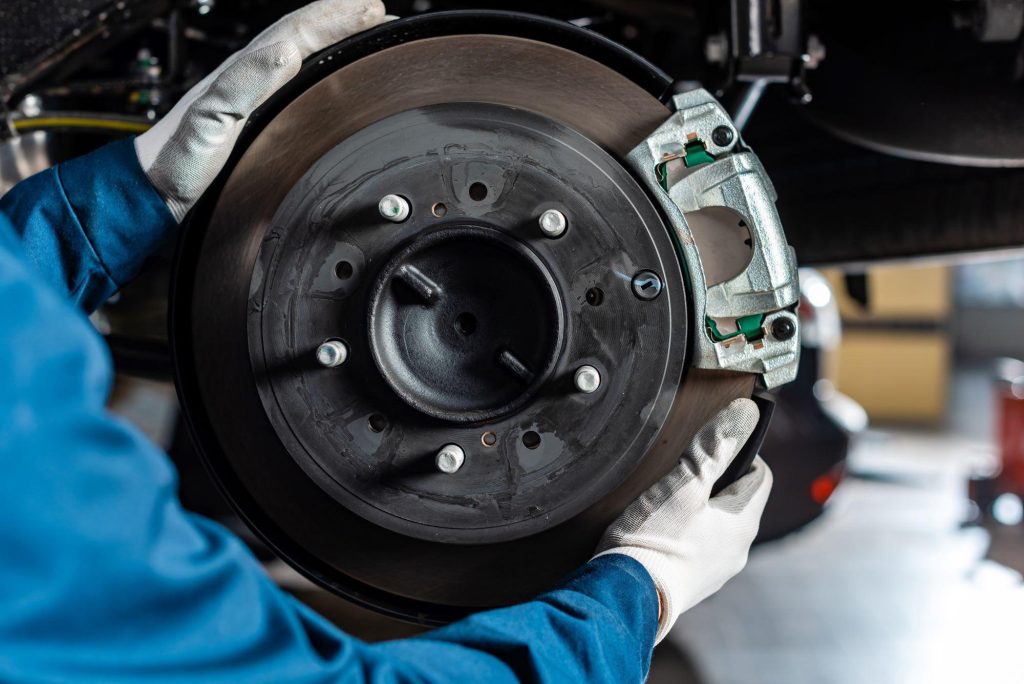
What it means: Most brake pads have a small metal tab called a wear indicator built into the pad. Once the friction material wears down to a certain thickness, that tab starts making contact with the rotor, producing a high-pitched squeal – usually only when you actually apply the brakes, though it can happen intermittently while driving too.
Why it happens: It’s a built-in early warning system, not a malfunction. The squeal is designed to be annoying enough that you notice it before the pads wear down completely.
What to do: This is the “green light” warning – the most common and least urgent of the signs on this list, but it still shouldn’t be ignored for months. Once you hear it, plan to have the pads inspected within the next couple of weeks. Squealing that shows up only in humid mornings and disappears after a few stops is often just light surface moisture or rust on the rotor and isn’t necessarily a sign of worn pads – but if it’s consistent and happens every time you brake, treat it as a pad-wear signal.
Sign 2: Grinding Noise
What it means: A grinding, growling, or metal-on-metal sound when braking usually means the pad’s friction material is completely worn away and the metal backing plate is now contacting the rotor directly.
Why it happens: Once pads wear past their friction material, there’s nothing left to cushion the contact between the caliper’s pad backing and the rotor surface. Metal grinding against metal at every stop.
What to do: This is more urgent than squealing. Continuing to drive on grinding brakes damages the rotors – sometimes badly enough that they need to be replaced instead of resurfaced, turning a pad-only job into a more expensive repair. Get this checked within a day or two, and avoid hard braking or long descents in the meantime.
Sign 3: Vibration or Pulsation in the Steering Wheel or Pedal
What it means: A pulsing feeling in the steering wheel, brake pedal, or sometimes the whole car when you brake – especially at highway speeds – usually points to uneven rotor surfaces, often called “warped rotors,” though true warping is less common than uneven wear or a layer of built-up material on one section of the rotor.
Why it happens: Rotors can develop high and low spots from repeated heating and cooling cycles, especially if the brakes are worked hard (heavy traffic, towing, or riding the brakes down an incline) and then allowed to cool unevenly. As the pad passes over these inconsistent spots, you feel it as a pulse.
What to do: This isn’t usually an emergency, but it typically gets worse over time rather than resolving on its own. Have the rotors measured – sometimes they can be resurfaced (machined flat again) if there’s enough material left; other times replacement is the more cost-effective and safer option.
Sign 4: Vehicle Pulls to One Side When Braking
What it means: If your car noticeably drifts left or right specifically when you apply the brakes (as opposed to pulling to one side all the time, which is more likely an alignment issue), one side of the brake system is applying more stopping force than the other.
Why it happens: A few different things can cause this – a caliper that’s sticking or not releasing fully, uneven pad wear side to side, a collapsed brake hose restricting fluid flow to one wheel, or contamination (like oil or grease) on one side’s pad or rotor.
What to do: Uneven braking force is a genuine safety issue, particularly in an emergency stop, because it can pull the car toward another lane or object. This is worth getting inspected promptly rather than waiting.
Sign 5: Soft, Spongy, or Sinking Brake Pedal
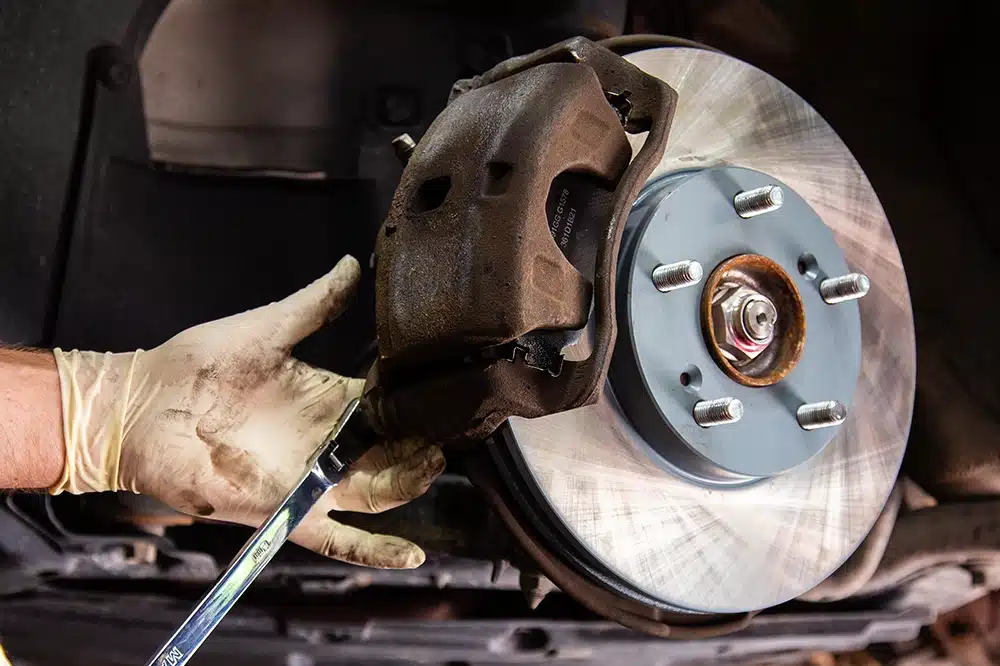
What it means: A pedal that feels mushy, sinks slowly toward the floor when held, or requires you to press further than usual before the brakes engage often points to air in the brake lines, a fluid leak, or brake fluid that’s absorbed too much moisture and is boiling under heat.
Why it happens: Brake fluid needs to stay incompressible to transmit pedal pressure to the calipers. Air bubbles compress, which is why they make the pedal feel spongy. A slow pedal sink usually indicates fluid is leaking past a seal somewhere in the system.
What to do: Of everything on this list, a soft or sinking pedal is one of the more serious signs – it can mean reduced braking power exactly when you need it most. Don’t wait on this one. If the pedal ever feels like it’s going almost to the floor, treat it as urgent and get it looked at before driving much further.
Sign 6: ABS or Brake Warning Light On
What it means: The brake warning light (often a red circle with an exclamation point, or the word “BRAKE”) can indicate low brake fluid, worn pads on vehicles with electronic wear sensors, or that the parking brake is engaged. The ABS light (usually a separate amber light with “ABS”) points to a fault in the anti-lock braking system specifically – a sensor, wiring issue, or module problem.
Why it happens: Modern vehicles monitor brake fluid level and, on many models, pad wear electronically, in addition to the traditional mechanical wear indicators.
What to do: A red brake light warrants getting the car looked at soon – it often means low fluid, which can point to a leak. An ABS light alone (without the red brake light) usually means your regular brakes still work, but you may lose anti-lock function during a hard stop, which matters most on wet roads – relevant during Naples’ frequent summer downpours. Either light is worth a diagnostic scan to identify the specific cause rather than guessing.
Sign 7: Longer Stopping Distances or a Burning Smell After Repeated Braking
What it means: If it takes noticeably more pedal pressure or more distance to stop than it used to, or you notice a sharp, burning odor after coming down a bridge or through heavy stop-and-go traffic, your brakes may be overheating or losing effectiveness – a condition often called brake fade.
Why it happens: Repeated hard braking without enough time to cool between applications raises brake temperatures beyond what the pads and fluid are designed to handle efficiently. In more extreme cases, this can happen with worn pads, glazed rotor surfaces, or old brake fluid with a lowered boiling point.
What to do: If you smell burning brakes, pull over safely when you can and let the brakes cool for at least 15–20 minutes before continuing – don’t keep braking hard on already-overheated components. If this happens more than once, or stopping distances feel consistently longer than normal, get the system inspected before it becomes a recurring issue.
How Long Do Brakes Actually Last?
There’s no single mileage number that applies to every car and driver, but here’s a general range based on typical wear patterns:
- Brake pads: Roughly 25,000–65,000 miles, depending heavily on driving style and traffic conditions. Frequent stop-and-go traffic pushes wear toward the lower end of that range; mostly highway driving pushes it toward the higher end.
- Rotors: Often last through two to three pad replacements if they’re not damaged by grinding or heat, but this varies by vehicle and rotor design.
- Brake fluid: Most manufacturers recommend flushing brake fluid every 2–3 years regardless of mileage, since it absorbs moisture over time whether or not the car is driven hard.
Because Naples’ traffic patterns and climate tend to push wear toward the faster end of these ranges, it’s worth having brakes checked as part of routine maintenance rather than waiting for a warning sign to show up.
Common Mistakes That Make Brake Problems Worse
Ignoring squealing for months. A squeal you get used to is still pad material wearing away underneath the noise. What starts as an inexpensive pad job can turn into a pad-and-rotor job if it’s ignored long enough.
Assuming one axle is fine because it’s quiet. Front and rear brakes wear at different rates depending on the vehicle, and a noise from one side doesn’t rule out wear on the other. A full inspection checks all four corners, not just the noisy one.
Topping off low brake fluid without finding the cause. Brake fluid doesn’t get “used up” in normal operation the way engine oil does. If the reservoir is low, fluid is escaping somewhere – a leak or worn component – and simply refilling it hides the symptom without fixing the cause.
Driving on grinding brakes “for a little while longer.” Every mile driven with pads worn past their friction material adds rotor damage, and rotor replacement costs meaningfully more than a pad-only service.
When to See a Professional vs. When You Can Monitor It
See a professional soon (within a day or two):
- Grinding noise
- Soft, sinking, or spongy pedal
- Vehicle pulling to one side when braking
- Burning smell or noticeably longer stopping distances
- Red brake warning light
Get it scheduled (within a couple of weeks):
- Consistent squealing every time you brake
- Steering wheel or pedal vibration during braking
- ABS light alone, with normal brake feel otherwise
If you’re ever unsure which category a symptom falls into, it’s reasonable to have it checked sooner rather than later – brake issues generally don’t improve with time, and catching a problem at the pad stage is almost always simpler and less expensive than catching it after it’s damaged a rotor or caliper.
Conclusion
Squealing, grinding, vibration, pulling, a soft pedal, warning lights, and longer stopping distances each point to a different part of the brake system wearing down or malfunctioning – and some are more urgent than others. Naples’ stop-and-go traffic, heat, humidity, and seasonal traffic increases all tend to accelerate this wear compared to a lot of other places, which makes paying attention to these signs (rather than just watching mileage) the more reliable approach.
If you’re noticing any of the symptoms above, the team at Naples Mechanics can take a look and tell you exactly what’s going on before it turns into a bigger repair. Call (239) 399-0928 to get your brakes checked.
FAQs
Is it safe to drive with squealing brakes?
Usually yes, for a short period – squealing on its own typically means the wear indicator has activated, not that the brakes have failed. But treat it as a signal to schedule an inspection within the next couple of weeks rather than something to ignore indefinitely.
Is it safe to drive with grinding brakes?
Not for long. Grinding means the pad’s friction material is gone and metal is contacting metal, which reduces stopping power and actively damages the rotor with every stop. Have it looked at as soon as you reasonably can, and avoid hard or repeated braking until you do.
Why do my brakes squeal in the morning but not later in the day?
This is common in humid climates like Naples. Light surface moisture or a thin layer of rust can form on rotors overnight, especially if the car sat outside. This usually causes a squeak for the first several stops of the day that clears up as the rust layer wears off – it’s different from the consistent squeal caused by worn pad material.
Do I need new rotors every time I replace brake pads?
Not necessarily. If the rotors are still within their minimum thickness specification and the surface is in good condition, they can often be resurfaced or reused. Rotors that are worn thin, heavily grooved, or damaged from grinding typically do need replacement.
Does Florida heat really affect brake performance?
Yes, in two main ways: high ambient heat raises the operating temperature of the brake system overall, and heat combined with moisture-saturated brake fluid can lower the fluid’s boiling point, which is most noticeable during hard or repeated braking, like in heavy traffic or coming down a bridge.
How often should brakes be inspected if I’m not noticing any symptoms?
A general guideline is to have brakes checked at every other oil change, or roughly once a year, even without symptoms – this catches wear before it turns into a noise, vibration, or safety issue.