
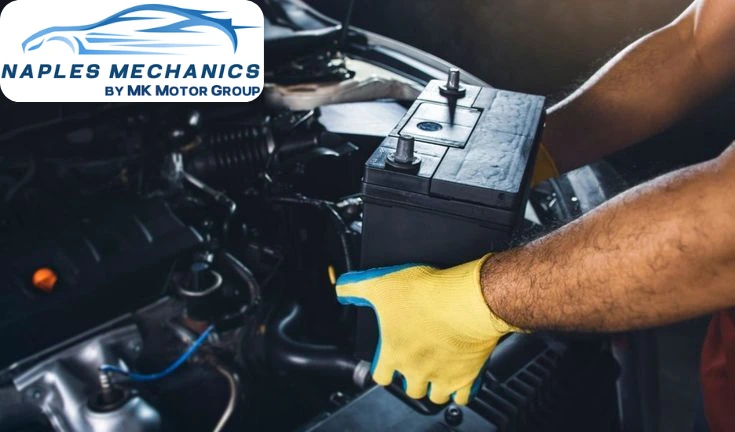
In Southwest Florida, most car batteries last about three years, not the four to five years you might expect. Heat, not cold, is what wears a battery out, and Naples summers are about as hard on a battery as it gets in the United States. The good news is that a few simple habits, plus an annual test, can buy you extra months and help you avoid a no-start in a parking lot.
Most people think batteries die in winter. In the north, people blame the cold for a weak battery’s final failure. However, the damage that ultimately leads to battery failure occurs during the summer, and Naples experiences a significant amount of summer heat. This post explains why that happens, how to spot a dying battery early, and what you can do about it.
Why Florida heat kills car batteries
A standard car battery is a sealed box of lead plates sitting in an acid and water mix called “electrolyte.” Heat speeds up the chemical reaction inside it. That sounds harmless, but two things happen when the temperature climbs:
The water in the electrolyte slowly evaporates, which leaves the lead plates exposed and unable to hold a charge. At the same time, heat speeds up corrosion on the internal grids that carry current. The damage is irreversible once those plates start to corrode. The battery does not heal when things cool down.
Underhood temperatures in a parked car in Naples can sit well above the outside air temperature in July and August. Your battery has been living in that oven for months. This is why a battery that would typically last five years in a cooler state often fails after about three years in Naples.
So how long should a car battery last in Naples?
Plan on about three years of reliable life, and start testing it once a year after the second year. Some batteries make it to four. Very few reach five in this climate without help.
If you are a snowbird and your car sits for months at a time, the clock works differently. A battery that sits unused slowly self-discharges, and sitting at a low charge in the heat damages it faster than normal driving would. We see plenty of seasonal cars come back to life in the fall with batteries that are already half dead.
Signs your car battery is dying
Catching a weak battery early is the difference between a planned ten-minute swap and a tow. Watch for these:
The engine cranks slowly when you start it, especially first thing in the morning. Your headlights look dim at idle but brighten when you rev the engine. You hear a single click, or rapid clicking, when you turn the key. Your dashboard shows a battery or charging warning light. Electronics act strange, like the radio resetting or windows moving slower. If your car has an automatic start-stop system, it stops shutting the engine off at red lights, which is often the first quiet hint that the battery is fading.
One slow crank is a coincidence. Two is a warning. If you get a slow start twice in a week, get the battery tested before it leaves you stranded.
What shortens battery life in Southwest Florida?
Heat is the main one, but a few local factors stack on top of it:
Short trips are surprisingly hard on a battery. Starting the engine uses a big burst of power, and a five-minute drive does not give the alternator time to fully recharge it. Many short hops around Naples leave the battery chronically undercharged, which shortens its life.
Salty air near the coast and high humidity speed up corrosion on the terminals and metal posts on top of the battery. White or blue-green crust on the terminals blocks power from flowing and can mimic a dead battery even when the battery itself is fine.
Accessories left running, dash cams wired to stay on, and aftermarket alarms all pull a small amount of power around the clock. In a hot climate that already stresses the battery, that constant drain adds up. If your battery keeps going flat and you cannot find the reason, a car diagnostic in Naples can trace the exact source of the drain before you replace anything.
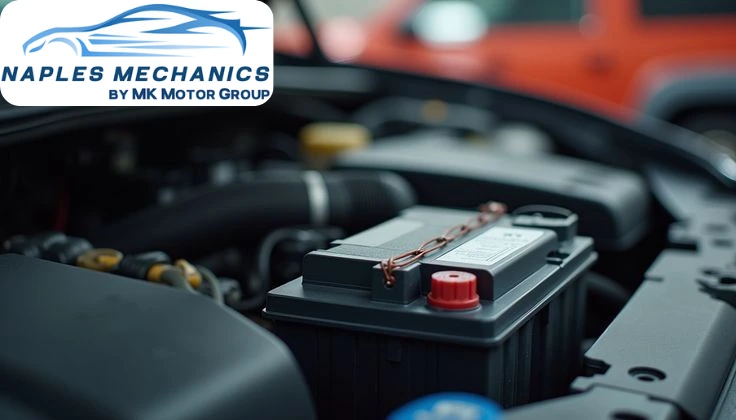
How to make your car battery last longer
You cannot beat the Florida heat, but you can slow the damage:
Park in the shade or in a garage whenever you can. Lowering the underhood temperature is the single most useful thing you can do. Drive long enough to recharge. If most of your trips are short, take one longer drive a week so the alternator can top the battery back up. Keep the terminals clean. If you see crusty buildup, that is a sign corrosion is interrupting the connection. Get an annual battery test once the battery passes two years old, ideally before summer. A test takes a few minutes and tells you the battery’s real cranking power versus its rating. If your car sits for weeks at a time, a simple battery maintainer (trickle charger) keeps it topped up and prevents heat damage from a low charge.
AGM vs. standard battery: Which is better for Florida?
If you are replacing a battery here, it is worth knowing the difference. A standard flooded battery is the cheaper, traditional type. An AGM battery (Absorbed Glass Mat) seals the electrolyte into glass mats inside the case, so nothing sloshes or evaporates the same way. AGM batteries handle heat, vibration, and frequent short trips better, and many newer vehicles with start-stop systems actually require one.
For a daily driver in Naples, an AGM battery often makes sense even when a flooded one would technically fit. It costs more upfront but tends to survive the heat longer. A reputable shop will tell you which type your specific car was built for, because putting the wrong type in can confuse the charging system.
Understanding when to replace a car battery versus when to recharge it is important.
A flat battery is not always a dead battery. If you left the lights on, a recharge or jump may bring it right back. But if the battery is over three years old, fails a load test, or keeps dying after a recharge, replacing it is the smart call. Repeatedly jump-starting a worn battery also puts strain on your alternator, and an alternator is a far more expensive part to replace.
One more thing worth knowing: modern cars often need a new battery registered to the car’s computer so the charging system treats it correctly. If a battery is swapped without that step, it can wear out early. This is why a quick professional install often outlasts a DIY one in newer vehicles.
Frequently asked questions
How often should I replace my car battery in Florida?
In the Naples heat, anticipate replacing your car battery approximately every three years, and also test it annually to avoid unexpected surprises.
Can heat really kill a car battery faster than cold?
Yes. Cold makes a weak battery fail, but heat is what causes the internal wear in the first place. Hot climates are harder on battery life than cold ones.
Why does my battery keep dying, even though it’s new?
Common causes are a charging system problem, a parasitic draw pulling power overnight, corroded terminals, or a battery that was never registered to the car’s computer. A test can pinpoint which one it is.
Is it bad to jump-start my car a lot?
Repeated jump-starts usually mean the battery is failing, and they put extra load on your alternator. It is cheaper to replace a dying battery than to risk the charging system.
Get your battery tested before it strands you.
If your battery is past the three-year mark or showing any of the warning signs above, do not wait for it to fail on a hot morning. Naples Mechanics offers a free battery and charging test and same-day car battery replacement in Naples FL. Call (239) 399-0928 or stop by 3784 Domestic Ave F, Naples, FL 34104.