
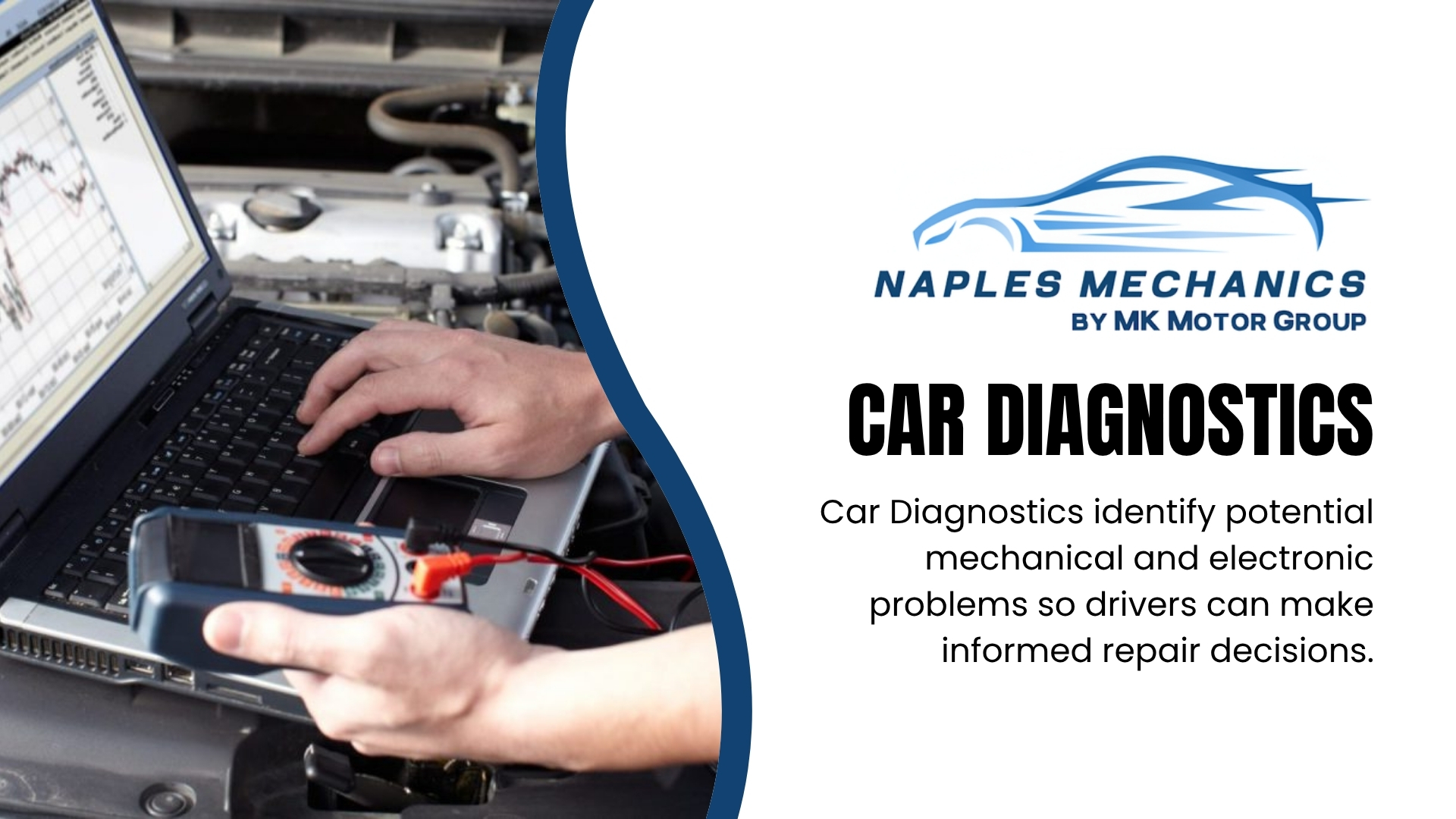
A check engine light can mean something minor, like a loose gas cap, or something that needs attention right away, like a misfire that can damage your catalytic converter. The light itself doesn’t tell you which one it is – a diagnostic scan does, by pulling the trouble codes your vehicle’s computer has stored and pointing a technician toward the actual cause.
This guide walks through what the light means, the most common reasons it comes on, how a diagnostic scan actually works, and how to tell whether your situation is a “keep an eye on it” issue or a “get it looked at today” issue. If you’re already past the “what does this mean” stage and just need someone to run the scan, our diagnostic mechanic service in Naples covers that directly.
What Does It Mean When Your Check Engine Light Comes On?
Every vehicle built since the mid-1990s uses an OBD2 (On-Board Diagnostics II) system. Sensors throughout the engine, transmission, and emissions systems constantly report data – oxygen levels in the exhaust, airflow into the engine, fuel trim, engine temperature, and dozens of other readings – to the vehicle’s computer, often called the ECU or PCM.
When one of those readings falls outside the range the computer expects, it stores a trouble code and turns on the check engine light. The light is a general alert, not a diagnosis. A code like P0300 tells you the computer detected a random or multiple cylinder misfire – it doesn’t tell you whether that’s caused by a worn spark plug, a bad ignition coil, a vacuum leak, or a fuel delivery problem. That’s the gap a proper diagnostic scan and follow-up testing are meant to close.
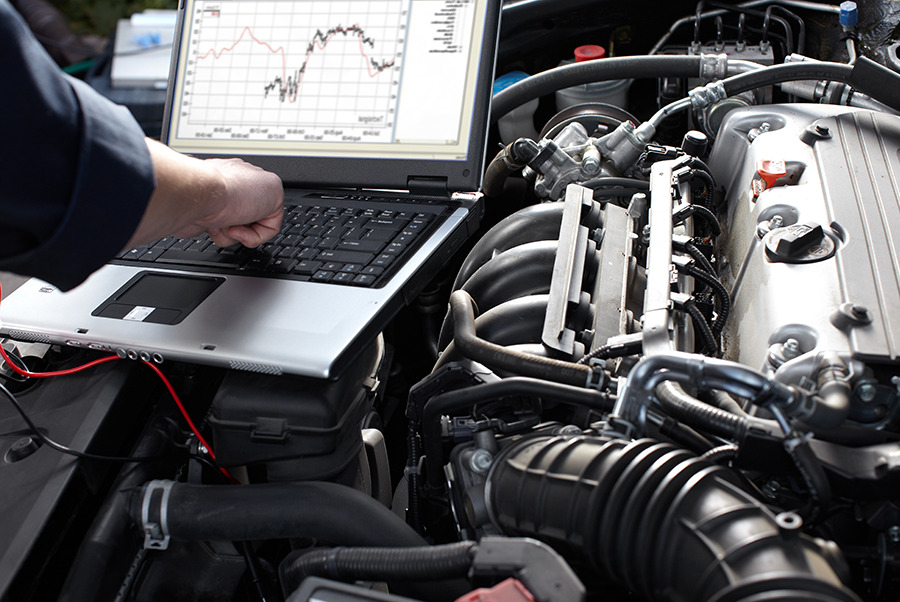
Steady Light vs. Flashing Light: Why the Difference Matters
Not every check engine light means the same level of urgency.
A steady, solid light usually means the computer detected an issue that isn’t causing immediate damage – an evaporative emissions leak, a sensor reading drifting out of range, or a minor fuel system issue, for example. It’s worth getting checked soon, but you can typically continue driving in the meantime.
A flashing check engine light is different. It almost always indicates an active engine misfire severe enough that unburned fuel is reaching the catalytic converter, where it can cause overheating and expensive damage. If your light is flashing, reduce speed, avoid heavy acceleration, and get the vehicle to a shop as soon as you reasonably can rather than continuing to drive on it for days.
Common Reasons the Check Engine Light Turns On
There’s no single answer to “why is my check engine light on” – it depends on the code and the vehicle. These are among the most frequent causes technicians see.
Loose or Damaged Gas Cap
A gas cap that isn’t tightened all the way, or one with a worn seal, lets fuel vapor escape from the tank. The evaporative emissions system detects the pressure loss and sets a code. This is one of the few causes a driver can sometimes fix themselves – tighten the cap until it clicks, and see if the light resets after a few drive cycles.
Oxygen (O2) Sensor Issues
Oxygen sensors measure how much unburned oxygen is in the exhaust so the computer can adjust the air-fuel mixture. A failing O2 sensor sends inaccurate readings, which can throw off fuel efficiency and, left unaddressed, shorten the life of the catalytic converter.
Catalytic Converter Problems
The catalytic converter reduces harmful emissions before exhaust exits the tailpipe. It can fail on its own over time, but it’s also commonly damaged as a secondary result of an ignored misfire or a failing O2 sensor – another reason catching the root cause early matters.
Mass Airflow Sensor (MAF) Issues
The MAF sensor measures how much air is entering the engine so the computer can calculate the right amount of fuel to inject. A dirty or failing MAF sensor can cause rough idling, hesitation during acceleration, or poor fuel economy, in addition to triggering the light.
Spark Plug and Ignition Coil Wear
Worn spark plugs or a failing ignition coil can cause a misfire – the engine skipping combustion in one or more cylinders. This often comes with a noticeable rough idle, a slight shudder under acceleration, or reduced power, and is a common source of the flashing-light scenario described above.
Electrical and Wiring Issues
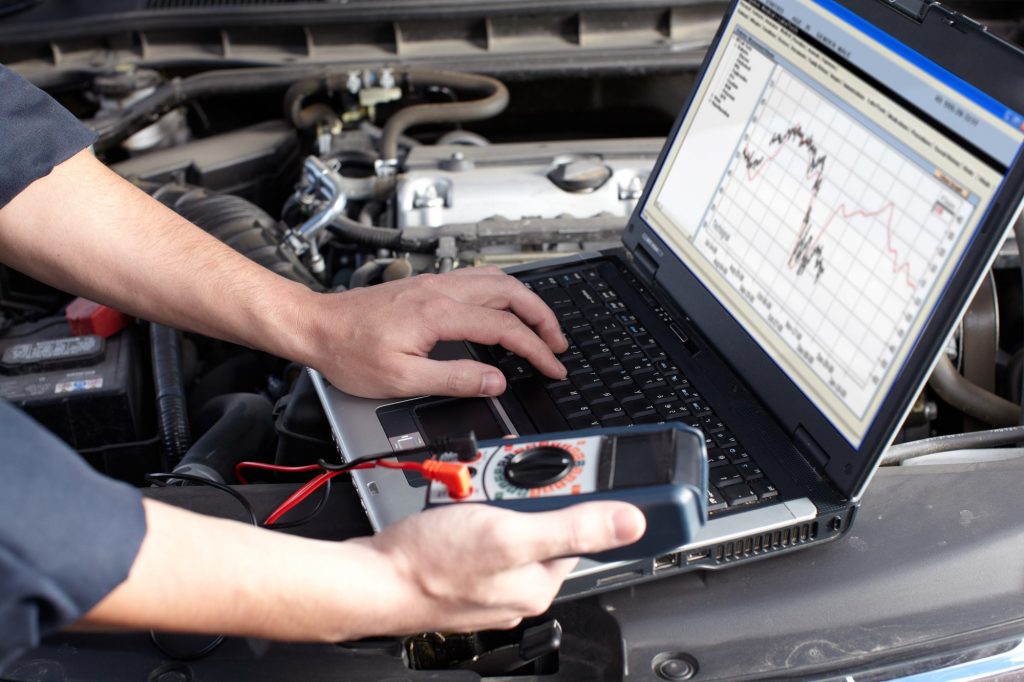
Not every trigger is a worn part. Corroded connectors, chafed wiring, a failing sensor circuit, or a loose ground connection can all send bad data to the computer. These are diagnosed through automotive electrical diagnostics – testing voltage, resistance, and circuit continuity rather than just swapping a part and hoping.
Other Dashboard Warning Lights and What They Mean
The check engine light isn’t the only dashboard indicator worth paying attention to, and several point toward issues that are handled through the same kind of diagnostic process.
- Battery/charging light – can indicate a failing alternator, a weak battery, or a charging-system wiring issue. This is squarely an electrical diagnostic issue rather than an engine one.
- ABS light – points to a problem in the anti-lock brake system, often a wheel speed sensor, and needs its own diagnostic scan since it uses a separate computer module from the engine.
- Oil pressure light – signals low oil pressure and should be treated as urgent; continuing to drive can cause engine damage.
- TPMS (tire pressure) light – usually simpler, indicating low tire pressure or a sensor issue, but worth checking before a longer drive.
If more than one light is on at once, that’s often a sign of a shared electrical cause – a weak battery or charging problem can trigger several warning lights simultaneously, which is one reason a scan tool that reads across multiple systems, not just the engine, gives a more complete picture.
Signs You Need a Diagnostic Scan Even Without a Warning Light
A trouble code doesn’t always turn the light on right away, and some issues show up as symptoms before (or instead of) a dashboard warning. Consider a diagnostic scan if you notice:
- Rough idling or the engine shaking at a stop
- Stalling, especially at low speeds or when coming to a stop
- A noticeable drop in fuel economy
- Hesitation or lack of power when accelerating
- Difficulty starting, or the engine cranking longer than usual
- Electrical quirks – flickering dash lights, power windows working intermittently, or accessories cutting out
- A burning or unusual smell while driving
Any of these can point to something the computer has already logged, even if the check engine light hasn’t come on yet, or to an issue building toward one.
How a Professional Diagnostic Scan Actually Works
A diagnostic scan is more than plugging in a code reader and reading whatever pops up. The process generally includes:
- Connecting an OBD2 scan tool to retrieve stored trouble codes and freeze-frame data – the conditions the vehicle was operating under when the code was set.
- Interpreting the codes in context. A code narrows down the system involved, but two vehicles with the same code can have different root causes depending on mileage, history, and other symptoms present.
- Physical inspection and testing. This might mean checking wiring and connectors, testing sensor output with a multimeter, inspecting for vacuum leaks, or road-testing the vehicle to reproduce the issue.
- Confirming the root cause before recommending a repair, rather than replacing parts based on the code alone.
That last step is where a lot of unnecessary spending gets avoided. A code for a misfire, for example, could be caused by a spark plug, a coil, a fuel injector, or a vacuum leak – replacing parts one at a time without testing is a guessing game that can cost more than the diagnostic scan itself.
Naples Climate and Coastal Conditions: Local Factors Worth Knowing
Southwest Florida’s climate puts particular stress on a vehicle’s electrical and cooling systems. Sustained heat and humidity for much of the year mean batteries, alternators, and electrical connectors work harder and tend to wear faster than they would in a milder climate. Corrosion on battery terminals and connectors shows up more quickly near the coast, where salt air is part of daily conditions – a common contributor to the kind of intermittent electrical issues that don’t always trigger a clean, easy-to-read code.
Afternoon storms during the wet season also mean more stop-and-go driving through standing water, which can affect exposed electrical connections over time. None of this means a Naples vehicle is destined for problems, but it’s part of why electrical diagnostics and standard engine diagnostics often go hand in hand here – a check engine light and a slightly slow-cranking starter can share a root cause in a battery or grounding issue rather than being two unrelated problems.
Why Guessing at Repairs Costs More Than a Diagnostic Scan
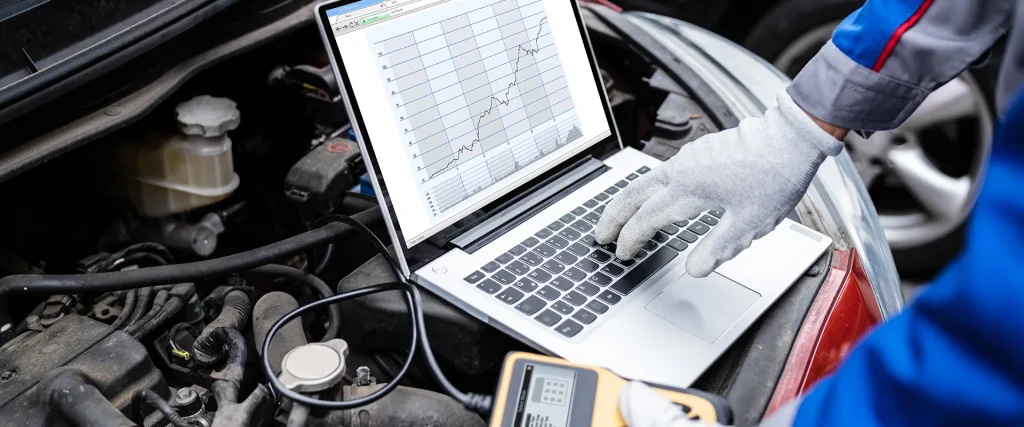
It’s tempting to look up a trouble code online and order the part it’s “supposed to be.” Sometimes that works. Often, it doesn’t, because a single code can have several possible causes, and the wrong part gets bought, installed, and returned – or worse, left on the car while the real issue keeps running. A proper diagnostic scan, followed by targeted testing, identifies the actual cause before any part gets replaced, which is usually faster and less expensive than trial-and-error repairs over several visits.
When to Bring Your Vehicle in for a Diagnostic in Naples
As a general guide:
- Check engine light is on and steady: Get it scanned within the next few days.
- Check engine light is flashing: Reduce driving and get it looked at as soon as possible.
- Any warning light paired with a symptom (stalling, rough idle, smell, loss of power): Don’t wait.
- No warning light, but new symptoms: Worth a scan – some issues build before triggering a code.
- Multiple dashboard lights at once: Often points to an electrical or charging issue worth diagnosing promptly.
If any of this sounds like what your vehicle is doing, our team handles diagnostic mechanic service in Naples, covering everything from checking engine light codes to electrical troubleshooting.
Conclusion
A check engine light is a starting point, not a diagnosis. Whether it’s a loose gas cap, a worn sensor, an ignition component, or an electrical issue tied to Naples’ heat and humidity, the only way to know for certain is a proper diagnostic scan followed by targeted testing. Pay attention to whether the light is steady or flashing, watch for symptoms even when no light is on, and get ahead of small issues before they turn into bigger ones – especially when it comes to misfires and electrical faults that can affect other systems.
If your check engine light is on or your vehicle is showing any of the symptoms above, call Naples Mechanics at (239) 399-0928 to schedule a diagnostic scan.
FAQs
Can I drive with the check engine light on?
It depends on whether the light is steady or flashing. A steady light usually means it’s safe to keep driving for a short period while you arrange a diagnostic scan. A flashing light indicates an active misfire that can damage the catalytic converter, so it’s best to limit driving and get it checked as soon as possible.
Will a diagnostic scan tell me exactly what’s wrong with my car?
A scan retrieves the trouble codes stored by the vehicle’s computer, which narrows down the system involved. From there, a technician typically does additional testing – checking wiring, sensor output, or related components – to confirm the exact cause before recommending a repair, since a single code can point to more than one possible issue.
How long does a diagnostic scan take?
A basic code retrieval takes only a few minutes, but a full diagnostic that includes interpreting the codes and testing the suspected cause usually takes longer, since it involves more than just reading what the scan tool displays.
Does a check engine light always mean a big, expensive repair?
Not necessarily. Some of the most common causes, like a loose gas cap or a worn sensor, are relatively inexpensive to fix. The light itself doesn’t indicate severity – that’s determined once the actual cause is identified.
Why did my check engine light turn off on its own?
The light can turn off if the underlying condition resolves itself, such as a gas cap that was loose and later tightened, or after a certain number of successful drive cycles without the issue recurring. The trouble code is often still stored in the computer’s memory even after the light turns off, which is why a scan can still be useful in identifying what triggered it.
Is a check engine light diagnostic different from a general car diagnostic?
A check engine light diagnostic focuses on codes from the engine and emissions systems. A broader vehicle diagnostic scan can also check other modules, like ABS, transmission, or the charging system, which is useful if you’re noticing more than one type of symptom.