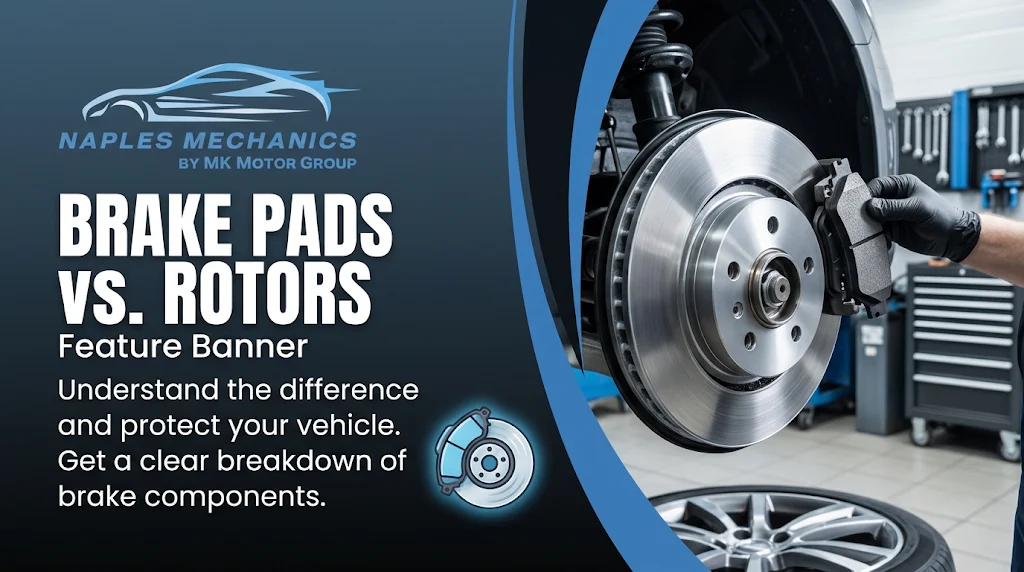
Brake Pads vs. Rotors is an important comparison for drivers who hear grinding when braking or feel the steering wheel shake as they slow down. When a mechanic recommends brake work, understanding whether your vehicle needs new brake pads, replacement rotors, or both can help you make an informed repair decision. For drivers in Naples, FL, knowing the difference can save unnecessary expenses while keeping their vehicles safe.
Pads and rotors wear differently, so one can be fine while the other is finished. The right repair depends on measured condition and your manufacturer’s specifications, not on noise alone. This guide explains what each part does, which warning signs point where, when pads alone are enough, and how an inspection should back up any quote. If you are looking for brake repair services in Naples, you will know exactly what to ask. Naples auto repair services
Understanding the Difference Between Brake Pads and Rotors
Brake pads and rotors work as a team, but each has its own job and wears out differently. Knowing which does what makes the rest of the repair decision much easier to follow.
What Do Brake Pads Do?
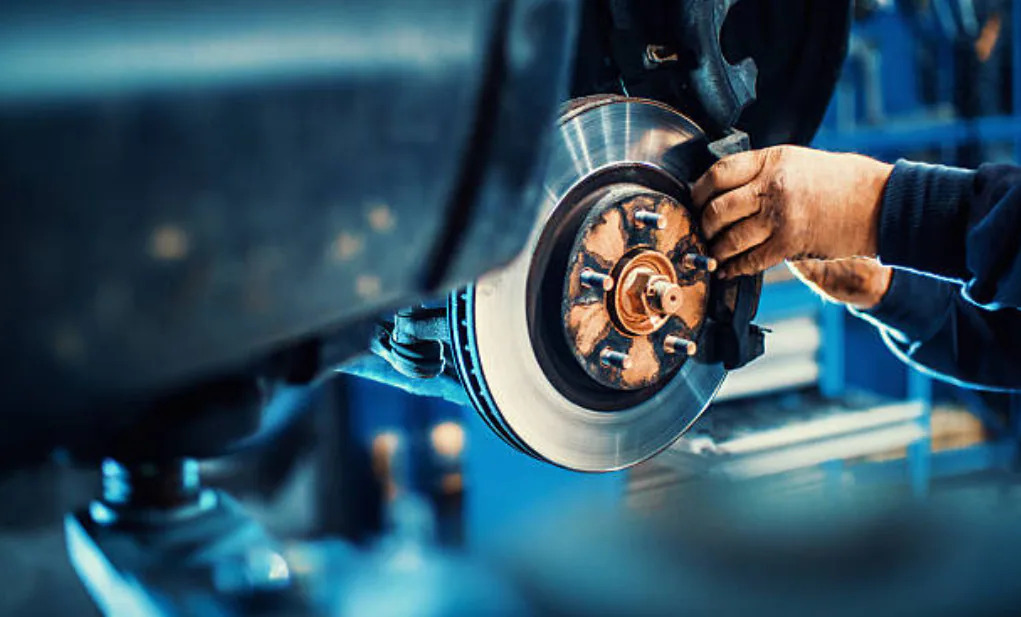
Brake pads carry a layer of friction material on a metal backing plate. When you press the pedal, the caliper squeezes the pads against the spinning rotor, and the resulting friction slows the wheel. That friction is also what wears the pads down. Every stop removes a tiny amount of material, so a vehicle used mostly for short, stop-and-go trips gradually thins its pads over thousands of braking events.
What Do Brake Rotors Do?
Rotors are metal discs bolted to the wheel hub, and they spin with the wheel. The pads clamp onto both faces of the disc, so the rotor’s thickness and surface condition directly affect how smoothly and strongly the car stops. Every rotor has a manufacturer-specified minimum thickness, and that number varies by vehicle. A rotor can look acceptable and still be too thin to reuse.
Brake Pads vs. Rotors: Key Differences
The table below shows how the two parts compare at a glance.
| Feature | Brake Pads | Brake Rotors |
| Main purpose | Create friction | Provide the friction surface |
| Location | Inside the brake caliper | Connected to the wheel hub |
| Wear | Friction material becomes thinner | Surface wears and thickness decreases |
| Common problem | Thin or uneven pads | Grooves, thickness variation, or cracks |
| Repair | Replace pads | Resurface if permitted, or replace |
Signs of Worn Brake Pads
Pads are the part designed to wear out, so they usually announce themselves first. The signs below are common, but none of them confirms the diagnosis on its own. Naples Mechanics can confirm what is behind a symptom with a hands-on inspection.
Squeaking or Chirping When Braking
Many pads include a wear indicator, a small metal tab that creates a high-pitched squeal once the friction material runs thin. Squeaking is not always a wear signal, though. Moisture, brake dust, and the pad material itself can cause noise, which is why a sound alone should lead to an inspection rather than a guess.
Grinding Noise During Braking
Grinding can mean the friction material is gone and metal is contacting metal. Other brake components can also produce grinding sounds, so the cause needs confirming. Either way, treat grinding as a reason to have the brakes inspected promptly rather than a noise to live with.
Reduced Brake Pad Thickness
Technicians measure the remaining friction material and compare it with the vehicle manufacturer’s replacement guidance. There is no single thickness that applies to every car, so be cautious of any rule of thumb that claims otherwise. Ask for the actual measurement when you are told the pads are due.
Uneven Brake Pad Wear
When one pad wears faster than its partner, something is usually wrong beyond the pad itself. Common causes include a binding caliper, uneven pressure, sticking slide pins, or tired brake hardware. Swapping the pads without fixing the cause often leads to the same uneven wear again.
Bad Brake Rotor Symptoms You Should Not Ignore
Rotor problems tend to show up as feel rather than sound. They also overlap with pad symptoms, which is where many drivers get confused. Here is what to watch for.
Steering Wheel or Brake Pedal Vibration
Variation in rotor thickness or excess runout can send a pulsing feeling through the pedal or steering wheel when you brake. Not every vibration points to the rotors, however. Tires, wheels, and suspension problems can feel similar, so diagnosis matters before any parts are ordered.
Deep Grooves or Visible Rotor Damage
Deep scoring, uneven surfaces, cracks, and heavy corrosion are all red flags. Appearance alone cannot tell you whether a rotor is safe to reuse, because thickness and runout have to be measured. A rotor that looks decent can still be out of specification.
Repeated Brake Noise
A damaged rotor surface can contribute to squealing, scraping, or grinding, especially if the noise returns after new pads. Worn pads, hardware, and caliper issues cause similar sounds, so recurring noise is a cue to look at the whole assembly rather than the rotors alone.
Reduced Braking Performance
Severe rotor damage or heat-related damage can reduce braking performance. So can worn pads and hydraulic problems, which is why longer stopping distances should never be self-diagnosed. If the car does not stop the way it used to, get it checked.
When Do You Need Brake Pad Replacement, Rotor Replacement, or Both?
This is the decision that matters most, and the answer comes from measurements, not from a standard package. Here are the three situations.
When Only Brake Pads Need Replacement
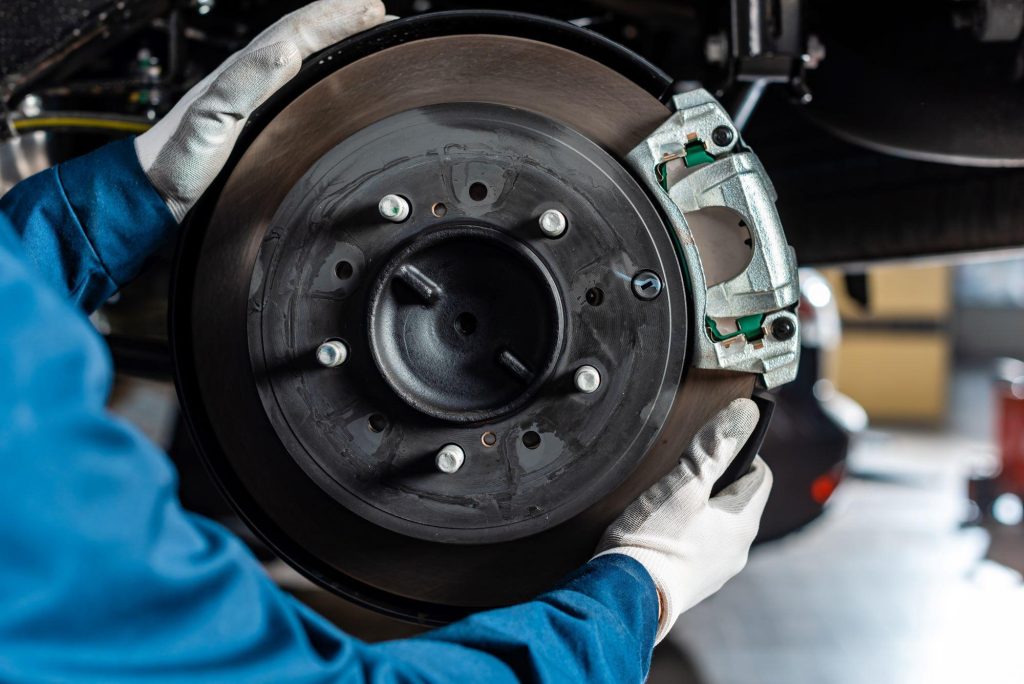
Pad-only replacement can make sense when the friction material has reached its service limit, but the rotors are still within specification. That means adequate thickness, a surface suitable for reuse, and no damage or related mechanical problems elsewhere in the assembly. For example, a car with worn pads and rotors comfortably above minimum thickness may need only new pads. The call still depends on manufacturer procedures and the condition of the whole brake assembly.
When Brake Rotors Need Replacement
Rotor replacement may be necessary when the rotor is at or below minimum thickness, has cracks or serious damage, or has a surface that cannot be corrected safely. It also applies when runout or thickness variation exceeds limits, or when resurfacing would leave the rotor under specification. A rotor that has reached its minimum thickness or shows cracks is not suitable for reuse, no matter how fresh the pads are. Rotors are generally replaced in axle pairs, subject to vehicle-specific requirements.
When Both Brake Pads and Rotors Should Be Replaced
Both need replacing when the pads are worn, and the rotors are damaged, excessively worn, or unsuitable for new pads. Picture a vehicle with thin pads and rotors below their specified minimum thickness: new pads alone would leave the real problem in place. Calipers and hardware should be inspected at the same visit, since a sticking slide pin can ruin a fresh set of pads and rotors quickly.
Not Sure Which Brake Components Need Replacing?
If your brakes are making unusual noises or your vehicle vibrates when stopping, a professional inspection can help identify the problem. Have your brake pads and rotors checked before deciding which components need replacement. Explore Brake Repair Services
Can Brake Rotors Be Resurfaced Instead of Replaced?
Sometimes, but only when the vehicle and the rotor allow it. Resurfacing is an option to evaluate, not a default.
What Is Brake Rotor Resurfacing?
Resurfacing removes a small amount of metal to restore a clean friction surface, when the manufacturer’s procedures permit it. The tradeoff is that the rotor ends up thinner than before, which is why thickness is the limiting factor.
When Is Resurfacing a Suitable Option?
Suitability depends on the remaining thickness, the type and depth of surface damage, the manufacturer’s required finished thickness, and the rotor’s runout. If the rotor will still meet specification after machining, resurfacing may be possible. Some vehicle designs restrict the procedure altogether, and Naples drivers should not assume it is cheaper or better in every case.
When Is Rotor Replacement the Better Choice?
Replacement is the right call when the rotor is too thin, cracked, heavily damaged, or otherwise outside service limits. Machining a rotor that has no thickness to spare only shortens the time until the next repair.
How a Complete Brake System Inspection Determines the Right Repair
A good recommendation rests on evidence you can see. A complete brake system inspection should go well beyond a glance through the wheel, and it is the reason to book with a shop that offers professional vehicle diagnostics.
Measuring Brake Pad and Rotor Wear
Technicians check pad thickness and measure the rotor’s thickness at the appropriate points. Those readings are then compared with vehicle-specific service limits, which turns “it looks worn” into a number you can verify.
Checking Rotor Surface Condition and Runout
The rotor surface is checked for scoring, cracks, and corrosion, and measured for thickness variation and lateral runout. These checks catch problems that cannot be seen by eye.
Inspecting Calipers and Brake Hardware
A technician should confirm that the caliper operates correctly, the slide pins move freely, the pads shift as they should, and the surrounding hardware is intact. Faults here cause uneven wear and repeat failures.
Reviewing the Vehicle’s Braking Symptoms
Your description of the noise, the vibration, and when it happens helps the technician connect the symptoms with the inspection findings and identify the likely cause.
What to Ask Your Mechanic Before Approving Brake Repairs
- How much friction material remains on the pads?
- What is the measured rotor thickness?
- What is the manufacturer’s minimum rotor thickness?
- Are there cracks, deep grooves, or other surface problems?
- Can the rotors be safely reused or resurfaced?
- Are the calipers and related hardware operating correctly?
A shop that backs its recommendation with answers to these questions is giving you something to verify, not just a bigger invoice.
Is It Safe to Drive With Worn Brake Pads or Bad Rotors?
Not when the brakes are showing serious symptoms. Grinding is a sign of significant wear, and a damaged rotor can reduce stopping ability even when the car still moves. Brakes are a safety system, and putting off the repair can turn a pad job into a bigger one.
A brake warning light, severe grinding, a pedal that sinks toward the floor, fluid leakage, or a major loss of braking ability calls for immediate attention. Stop driving when it is safe to do so and arrange professional help rather than waiting for an appointment. No mileage or distance is safe to drive on compromised brakes, so do not rely on them. When in doubt, have the vehicle inspected at a brake repair service in Naples before driving further.
Get Professional Brake Repair in Naples, FL
A proper diagnosis serves you better than replacing parts because of a noise. Naples Mechanics offers brake repair, and a visit can help you work out whether you need pads, rotors, or both. If you notice unusual sounds, vibration, or a change in stopping performance, schedule a brake inspection with a local shop in Naples, Florida, before the problem grows. Daily stop-and-go driving puts regular demands on your brakes, so periodic vehicle maintenance checks are a sensible habit. Naples Mechanics on Google
Frequently Asked Questions
Can you replace brake pads without replacing rotors?
Yes, sometimes. It is possible when the rotors remain within the manufacturer’s thickness specifications, and their surfaces are suitable for reuse. A mechanic should inspect and measure the rotors before installing new pads.
How do I know if my brake rotors need replacing?
Deep grooves, cracks, excessive wear, minimum-thickness violations, and unacceptable runout or thickness variation can all indicate replacement. Vibration and noise are warning signs, but they do not confirm rotor failure by themselves.
Should brake rotors be replaced every time brake pads are changed?
No, not automatically. The rotor’s condition, measured thickness, and the manufacturer’s specifications determine whether it can be reused, resurfaced, or replaced.
How long do brake pads and rotors last?
Lifespan depends on vehicle weight, driving habits, traffic conditions, pad material, braking frequency, and maintenance, so no fixed mileage applies to everyone. Follow your owner’s manual and have the brake components inspected regularly.
Can you drive with bad brake rotors?
Damaged rotors can affect braking performance and safety. Severe grinding, cracks, major vibration, or reduced stopping ability should not be ignored. If braking is compromised, stop safely and arrange professional assistance.
Conclusion
Worn pads do not automatically mean new rotors, and new pads cannot fix a rotor that is too thin or damaged. Measurements and inspection findings should decide the repair.
Need Brake Repair in Naples, FL?
Whether your vehicle needs brake pad replacement, rotor replacement, or a complete brake inspection, Naples Mechanics can help you understand the repair options. Contact the team to discuss your vehicle’s braking concerns and arrange the appropriate service. Contact Naples Mechanics