If your brakes have started squealing at every stop sign on Pine Ridge Road, or you’ve noticed the pedal sinking a little lower than it used to, you’re not imagining things. Brake repair in Naples, FL is one of the most common services local drivers need, and for good reason. Between the heat, the humidity, the salt air rolling in off the Gulf, and the constant stop-and-go traffic during snowbird season, Southwest Florida is tough on brake systems in ways drivers up north rarely deal with.
This guide walks through exactly what’s happening when your brakes start acting up, what the difference is between brake service, brake repair, and brake inspection, how often you actually need to have your brakes checked in this climate, and what to expect when you bring your vehicle to a qualified shop. Whether you’re hearing a strange noise right now or you’re just trying to stay ahead of a problem before it becomes an expensive one, you’ll find real, practical answers here instead of vague generalities.
Why Naples Drivers Deal with Faster Brake Wear
It’s tempting to assume brakes wear out at the same rate everywhere, but that’s not quite true. A few things specific to living in Naples put extra strain on your braking system.
First, there’s the heat. Brake components, especially rotors and calipers, are designed to dissipate heat generated by friction. When ambient temperatures regularly sit in the 90s for months at a time, that heat has less room to escape, which can accelerate wear on pads and cause brake fluid to break down faster than it would in a cooler climate.
Second, salt air is a real factor here, even if you’re not driving right along the coast. Airborne moisture and salt content contribute to corrosion on metal brake lines, rotors, and calipers over time. Rust buildup on rotors is something local mechanics see far more often than shops inland.
Third, traffic patterns matter more than people think. Naples sees a massive seasonal population swing. From roughly November through April, US-41, Pine Ridge Road, and Airport-Pulling Road turn into stop-and-go corridors packed with tourist and seasonal resident traffic. Constant braking in heavy traffic heats pads and rotors repeatedly throughout a single drive, which wears components down faster than steady highway cruising would.
Put those three factors together, and it’s easy to see why brake service in Naples tends to come up more frequently on maintenance schedules than the national average suggests it should.
Brake Service vs. Brake Repair vs. Brake Inspection: What’s the Difference
One thing that trips up a lot of drivers searching online is assuming these three terms all mean the same thing. They don’t, and understanding the difference can help you know exactly what to ask for when you call a shop.
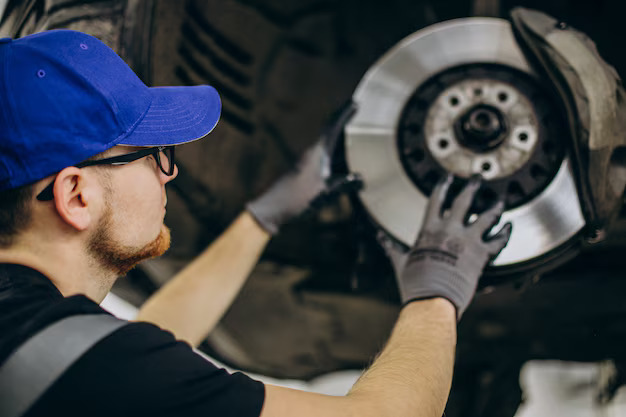
Brake inspection is a diagnostic check. A technician looks at pad thickness, rotor condition, brake fluid level and color, brake lines, calipers, and overall system performance. Nothing gets replaced during an inspection unless you approve it afterward. This is what you want if you’re not sure whether something is actually wrong or just want peace of mind before a road trip.
Brake service is a broader, more routine category. It typically includes things like a fluid flush, cleaning and lubricating hardware, checking for wear, and light maintenance tasks that keep the system operating properly without necessarily replacing major parts.
Brake repair is what happens once a problem has been identified. This covers pad replacement, rotor resurfacing or replacement, caliper repair, brake line replacement, and anything else needed to correct a specific issue.
Knowing this distinction matters because it changes what you should expect to pay and how long the appointment will take. A quick inspection might take twenty minutes. A full brake repair involving rotors and calipers is a different job entirely.
Warning Signs Your Brakes Need Attention
Most drivers wait too long to get brakes checked, usually because the early signs are easy to dismiss as background noise. Here’s what to actually pay attention to.
- A high-pitched squeal when braking. This is often the wear indicator built into the pad doing exactly what it’s designed to do, alerting you that the pad is getting thin.
- A grinding or metallic scraping sound. This is more serious. It usually means the pad material has worn away completely and metal is now grinding against metal, which can damage the rotor.
- A soft or spongy brake pedal. This can point to air in the brake lines or a fluid leak, both of which affect stopping power.
- The vehicle pulled to one side when braking. This often signals uneven pad wear or a caliper that isn’t releasing properly.
- Vibration or pulsing through the pedal. This is a classic sign of warped rotors, which happens more often in stop-and-go driving conditions like Naples traffic.
- A burning smell after driving. This can mean the brakes are overheating, sometimes from a stuck caliper that’s causing constant friction even when you’re not pressing the pedal.
- The dashboard brake warning light. Modern vehicles monitor fluid levels and pad wear electronically, so if this light comes on, it’s worth having it checked promptly rather than waiting.
If you notice more than one of these at the same time, it’s a good idea to get in for an inspection sooner rather than later. Brake problems rarely fix themselves, and ignoring early signs almost always turns a smaller repair into a bigger one.
How Often Should You Get Your Brakes Inspected in Naples
There’s no single number that applies to every driver, since brake wear depends heavily on how and where you drive. That said, a few general guidelines apply well to Naples conditions.
Most manufacturers recommend a brake inspection roughly every 12,000 miles, which for the average driver works out to about once a year. However, if you do a lot of city driving on US-41 or through downtown Naples during peak season, or if you’re regularly stuck in traffic near the beaches, you’re braking far more often than someone doing mostly highway miles. In that case, twice a year is a smarter target.
It’s also worth having brakes checked any time you get new tires, since the shop already has the wheels off and can visually inspect pad thickness and rotor condition without extra labor. Many drivers in Naples pair a brake inspection with their seasonal pre-summer or pre-season maintenance check, which makes sense given how much the local population and traffic volume shift throughout the year.
If your vehicle is used for towing a boat, which is common here given the proximity to the Gulf and inland waterways, brakes wear noticeably faster and deserve more frequent attention.
What Happens During a Professional Brake Repair
Understanding the actual process can take some of the mystery out of a brake appointment, especially if it’s your first time dealing with a repair rather than routine maintenance.
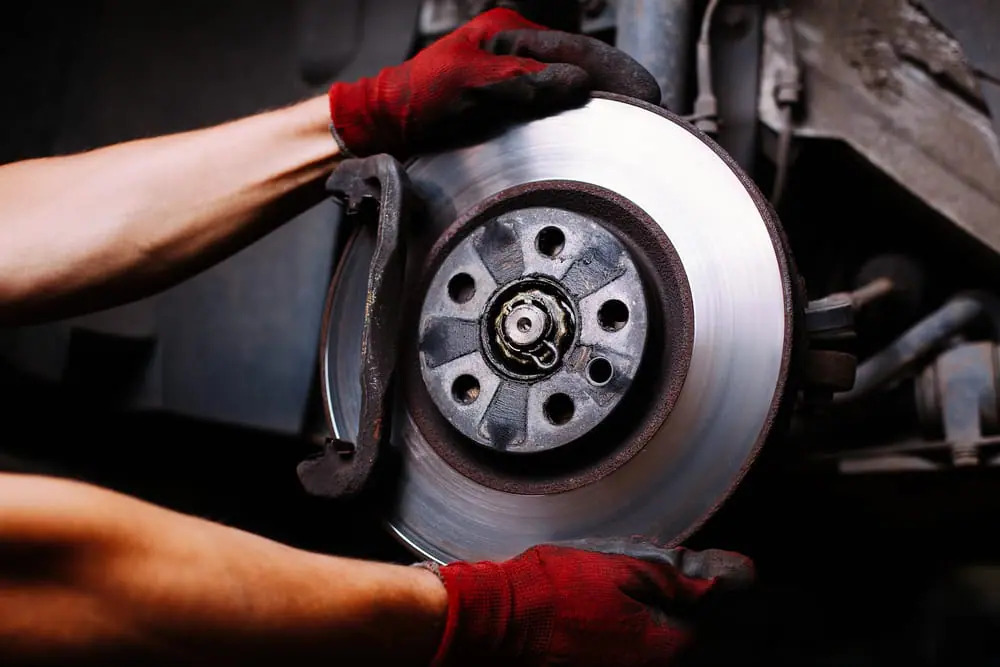
A properly done brake repair generally starts with removing the wheels so the technician can get a full visual on the pads, rotors, calipers, and brake lines. From there, pad thickness gets measured, since most manufacturers recommend replacement once pads reach around 3 millimeters or less. Rotors get checked for scoring, warping, and thickness, since a rotor that’s too thin or unevenly worn can’t be resurfaced and needs to be replaced instead of just machined smooth.
Calipers are tested to make sure they’re moving freely and applying even pressure. A caliper that’s sticking or seized is often the hidden cause behind uneven pad wear or pulling to one side, and it’s a detail that gets missed if a shop is just slapping on new pads without a full inspection.
Brake fluid gets checked for contamination and moisture content too. Brake fluid is hygroscopic, meaning it absorbs moisture over time, and in a humid climate like Naples, that moisture absorption happens faster than in drier regions. Contaminated fluid lowers the boiling point of the fluid, which can reduce braking performance under hard stops, so a fluid flush is sometimes recommended even if the pads and rotors are still in decent shape.
Once everything is diagnosed, a good shop will walk you through exactly what needs to be done and why, rather than just handing you a bill. That transparency matters, especially for anyone who’s been burned before by vague explanations or upsells that don’t actually address the problem.
Why Choosing a Local, Experienced Shop Matters
There’s a real difference between a shop that’s worked on hundreds of vehicles across Naples, Bonita Springs, and Fort Myers, and a shop that’s applying a one-size-fits-all national checklist. Local experience means technicians have seen firsthand how salt air corrodes brake lines faster along coastal routes, how heavy seasonal traffic wears down pads differently than a typical suburban commute, and which vehicle makes and models tend to have specific brake issues that show up more often in this climate.
ASE certification is another factor worth checking for. It signals that a technician has met a recognized industry standard for training and competency, rather than learning purely on the job without formal evaluation. Combined with years of hands-on experience in the local market, that certification gives drivers a reasonable level of confidence that a diagnosis is accurate and a repair is done correctly the first time.
Transparent, upfront pricing also matters more than people realize. Brake repair is one of those services where costs can vary widely depending on vehicle make, parts needed, and labor involved, and a shop that provides a clear quote before starting work, rather than surprising you afterward, is generally a shop worth returning to.
Common Brake Repair Services Explained
To make things a little more concrete, here’s a rundown of the specific services that typically fall under brake repair, and when each one is usually needed.
- Brake pad replacement happens when pads wear down past the safe threshold, usually indicated by squealing or a wear indicator light. This is the most common brake repair by far.
- Rotor resurfacing involves machining a rotor’s surface smooth again if it has minor scoring or unevenness, extending its life without full replacement.
- Rotor replacement is necessary when a rotor is too thin, warped beyond repair, or too damaged to resurface safely.
- Brake fluid exchange replaces old, moisture-contaminated fluid with fresh fluid to maintain proper hydraulic pressure and pedal feel.
- Caliper repair or replacement addresses sticking, seized, or leaking calipers that affect even braking pressure across the wheels.
- Brake line and hose replacement becomes necessary when lines corrode, crack, or leak, which, as mentioned earlier, happens more often in coastal, humid environments.
- Drum brake service applies to the rear brakes on many vehicles still equipped with drum systems, involving inspection and replacement of shoes, springs, and related hardware.
- Anti-lock brake system diagnostics come into play when the ABS warning light illuminates, often requiring specialized scanning tools to identify the specific sensor or module causing the issue.
Not every repair applies to every vehicle, which is exactly why a proper inspection before any work begins is so important. A trustworthy shop diagnoses first and repairs second, rather than assuming a standard fix applies across the board.
Keeping Your Brakes in Top Shape
Brakes aren’t a part of your vehicle you want to gamble on, especially in a place like Naples where traffic, heat, and salt exposure all work against your braking system faster than they would elsewhere. Paying attention to early warning signs, sticking to a reasonable inspection schedule, and choosing a shop with real local experience and proper certification can save you money in the long run and, more importantly, keep you and everyone on the road around you safer.
If it’s been a while since your last brake check, or if you’ve noticed any of the warning signs covered above, don’t wait for the problem to get louder or more expensive. A straightforward inspection today can prevent a much bigger repair bill down the road.
FAQ’s
How much does brake repair typically cost in Naples FL?
Cost depends on the vehicle and parts needed, ranging from a basic pad replacement to a full rotor and caliper job. Getting an inspection first gives you an accurate, itemized quote before any work begins, avoiding guesswork or surprise charges.
How long does a brake repair appointment usually take?
A straightforward pad replacement often takes under an hour. More involved repairs, like rotor replacement or caliper work, can take a few hours depending on the vehicle and parts availability at the shop.
Can I drive with grinding brakes?
It’s not recommended. Grinding usually means the pad material is gone and metal is contacting metal, which can damage rotors and reduce stopping power. Get it inspected as soon as possible to avoid a costlier repair.
Do I need a brake inspection even if nothing seems wrong?
Yes, ideally once or twice a year depending on your driving habits. Many brake problems develop gradually and aren’t obvious until they’ve already caused additional wear on other components.
Why do brakes wear faster in Naples compared to other areas?
Heat, salt air, and heavy seasonal traffic all combine to accelerate wear on pads, rotors, and brake lines here more than in cooler, drier, less congested regions.
What’s the difference between brake pads and rotors?
Pads are the friction material that presses against the rotor to slow the wheel. Rotors are the metal discs the pads clamp onto. Pads wear out faster and get replaced more often, while rotors last longer but can wear, warp, or corrode over time.